Measure I: 2026 Local Sales Tax Measure
Measure I Community Meeting
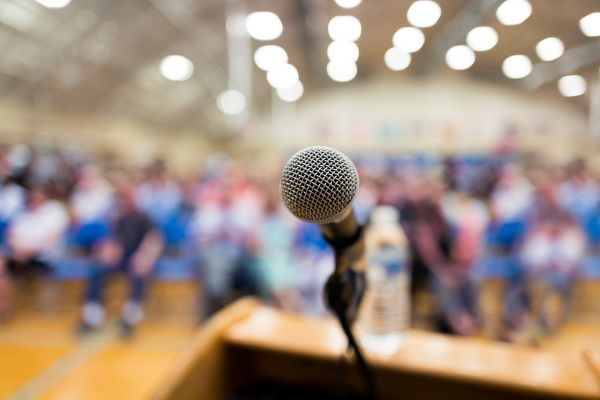 September 30, 2026 at 6:00PM
Huerta Gymnasium, 9291 Old Redwood Hwy #200
The Town of Windsor hosted an informational community meeting on Measure I, the 1% local sales tax on the Nov. 3 ballot. Town staff provided a brief overview of Measure I, followed by a Q&A session.
If you missed the meeting, you can watch the Measure I Community Meeting video on our Youtube Channel.
November 2026 General Election
On Nov. 3, 2026, Windsor residents will have the opportunity to vote on Measure I, a 1% Transactions & Use Tax (TUT), also referred to as a local sales tax. Revenue from a local sales tax stays entirely in Windsor. If approved by voters, Measure I is projected to generate $5.7 million in annual General Fund revenues to help fund Town services and community priorities, such as emergency response services, street repairs, traffic safety, park maintenance and recreation programs.
Windsor Town Council voted on Wednesday, July 15, to place Measure I on the upcoming November ballot.
Language That Will Appear on the Ballot
To provide funding for the Town of Windsor to maintain essential local services, such as repairing potholes and maintaining streets; neighborhood police patrols / emergency response / traffic enforcement; preserving parks / community events; disaster preparedness and fire prevention — removing brush / flammable fuels, and for general government use; shall the measure establishing a 1% sales tax, providing approximately $5,700,000 annually until ended by voters, requiring independent audits, citizen oversight, and all funds remaining in Windsor under local control, be adopted?
About Measure I
For over 33 years, the Windsor community has prided itself on having safe neighborhoods, well-maintained streets, beautiful parks and gathering places that bring people together.
However, the cost of providing these essential services like public safety, infrastructure maintenance and day-to-day operations has been increasing faster than the Town’s revenues. The Town’s 2025–27 Adopted Budget included approximately $6 million in operational reductions, including three police positions, holding vacant staff positions open and deferring maintenance on roads and park infrastructure, weed abatement and community events. Even after these reductions, the Town utilized nearly $8 million in reserves to maintain existing service levels.
This temporary combination of cuts, deferrals and reserve use has allowed Windsor to maintain a reduced, but high level of service in the short term. However, reserves are meant for one-time emergencies, not to balance budgets. Without new, ongoing revenue, Windsor is projected to face annual General Fund shortfalls of $4–$5 million beginning in Fiscal Years (FY) 2027–29. This shortfall would deplete all remaining reserves by FY 2029 and compromise the Town’s ability to maintain essential services, repair infrastructure and respond effectively to emergencies.
To address these challenges and maintain the services residents have said are important to them, the Town Council voted to place Measure I, a 1% Transactions & Use Tax (TUT), also referred to as a local sales tax, on the November 2026 ballot. The Town also passed the Fiscal Accountability and Stewardship Policy to ensure transparency and additional fiscal oversight of incoming measure revenue by tracking the new revenue through independent audits, annual public workshops and a dedicated Citizens’ Oversight Committee.
Frequently Asked Questions (FAQ)
Plain-language explanations of the Town’s budget situation, how sales tax works, and what a measure could mean for Windsor.
Windsor residents have told the Town they value safe streets, well-kept parks and local events.
However, the cost of providing these services is growing faster than the revenues the Town depends on. Rising expenses for public safety, infrastructure, insurance, materials, supplies, equipment, the cost of construction and general operations continue to outpace the modest growth of Windsor’s primary revenue sources — property tax, sales tax and transient occupancy tax.
Absent new revenue, the Town will have to consider additional program and infrastructure cuts. In the last budget cycle, the Town Council reduced staff positions, including in police, and deferred park and road projects.
The Town Council voted to place a 1% Transactions & Use Tax (TUT) on the November 2026 ballot to help maintain the everyday services. Since revenue from a local sales tax would stay in Windsor and cannot be taken by the state, it would help maintain local services like public safety, street maintenance and park upkeep.
In an ongoing effort to maximize efficiency, the Town of Windsor has already made significant cuts, about $6 million, reducing staffing, including three police positions, holding vacancies open, deferring road and park maintenance and reducing weed abatement and community events.
Without a sales tax or other new revenue, deeper cuts would have to be considered. A “Plan B” Budget has been presented to Council that reflects reductions in services across all departments, including police, and delayed road repairs, reduced park maintenance and fewer recreation programs.
For more details, view the FY 2027-29 Plan B Budget slides (see Slide 20)
Windsor’s sales tax rate is 9.25% — the lowest of any city in Sonoma County and the only one without a local sales tax.
If you shop in neighboring cities, you pay their higher sales tax rates, which means your money goes toward funding their police, parks and roads instead of staying here in Windsor.
Today, Windsor keeps only a 1% local share from taxable sales. A 1% local Transactions & Use Tax (TUT) would double Windsor’s locally retained share on purchases made in Windsor. With a 1% local tax, Windsor’s total rate would be 10.25%, in line with most Sonoma County cities that already have local add-ons.
In short:
- Current: 9.25% total — Town keeps 1%
- With a 1% local tax: 10.25% total — Town keeps 2% (double the local share)
Windsor’s taxable retail sales averaged $12,092 per resident — well below the Sonoma County average ($17,043) and the California average ($16,045). Analysis shows Windsor captures only about 76% of its fair share of retail sales based on household income, meaning roughly 24% of residents’ spending power is spent in other communities, most of which already have their own local sales tax.
Because Windsor hasn't established a local tax measure of its own, those dollars help fund police, roads and parks in other cities rather than maintaining services here. A 1% local sales tax would generate about $5–$6 million annually, paid by both residents and visitors. These locally controlled funds could help close Windsor’s projected budget gap, maintain essential services and reinvest in community priorities without deeper cuts or further reliance on reserves.
Independent analysis estimates that a 1% local sales tax could generate approximately $5.7 million annually for Windsor — paid by both residents and visitors.
This locally controlled funding could help maintain essential services and keep Windsor’s quality of life strong.
If approved, the revenue would go into Windsor’s General Fund, which can be used for any Town purpose, including supporting priorities such as:
- Maintaining police staffing and public safety services
- Repairing streets and improving traffic safety
- Maintaining parks, recreation programs, and community facilities
- Protecting services for youth, seniors and families
- Investing in economic development and community amenities
No. All funds would remain in Windsor under local control.
If approved by voters in November 2026, the 1% tax would begin being collected in April 2027.
California law exempts many essential goods and certain services from sales tax. These items would remain exempt even if Windsor adopts a local sales tax:
- Groceries
- Diapers and baby formula
- Feminine hygiene products
- Prescription medications
- Medical devices and supplies.
- Utilities
- Agricultural products
- Educational materials
The proposed local sales tax would only apply to goods and services already subject to California’s sales tax. If an item is exempt under state law, it will remain exempt.
No. Anyone who shops in Windsor or has goods delivered here — including visitors and commuters — would contribute.
Many Windsor residents commute to other cities and already pay higher sales tax rates there. This measure ensures that visitors and non-residents also help fund the services they use.
The Town faces a recurring annual General Fund shortfall of $4-$5 million beginning in FY 2027-29, which would deplete remaining reserves by FY 2029 without new, ongoing revenue.
If no local sales tax is approved and an alternative source of additional funding is not identified, the Town will have to consider deeper cuts to core services such as public safety staffing and response, street repair and traffic safety, park and facility upkeep and programs for youth, seniors and families while also deferring infrastructure projects that grow more expensive over time.
If passed, the sales tax would remain in effect until ended by voters.
Most alternatives either generate too little revenue to close the $4-$5 million structural gap or are restricted in use of funds (e.g., parcel taxes). A 1% TUT can deliver $5-$6 million per year with majority approval, local flexibility, and visitors and commuters paying their fair share.
For a median-income Windsor resident, the estimated impact is about $6 per month.
This estimate is based on typical take-home income in Windsor (around $3,850 per month after taxes) and average spending patterns. Using the U.S. Bureau of Labor Statistics 2023 Consumer Expenditure Survey, we applied national spending shares across major categories (housing, transportation, food, entertainment etc.), then adjusted for Windsor’s local retail capture (“leakage”) to estimate how much spending occurs on taxable purchases in town.
The tax only applies to a portion of residents’ monthly spending, such as retail purchases, dining and entertainment. Everyday necessities like rent or mortgage payments, healthcare and most groceries are not taxed. Applying a 1% rate to the estimated taxable portion produces an average of about $6 per month.
The methodology was developed by the Town’s Economic Development Division with the Sonoma County Economic Development Collaborative and draws on the 2023 BLS Consumer Expenditure Survey, Windsor retail leakage data and standard 2025 state and federal tax assumptions. A detailed workbook is available upon request from Tim Ricard, Economic Development Manager (tricard@townofwindsor.ca.gov).
The sales tax rate for both new and used vehicles is determined by the location where the vehicle is registered, not where it is purchased. For example, a Windsor resident currently pays 9.25% on a vehicle purchased anywhere in California, while a Petaluma resident pays 10.25%, because tax rates vary by jurisdiction of registration. However, 1% of the tax always goes to the city where the dealership is physically located (Santa Rosa, Petaluma, Sacramento etc.), just like the sale of clothing or other retail goods. As a result, Windsor currently receives no revenue when residents buy vehicles outside of town. If Windsor were to adopt a 1% local sales tax (TUT), Windsor residents would pay 10.25% on vehicle purchases. The Town would receive 1% on every vehicle registered to a Windsor address, regardless of where the vehicle was purchased, because district taxes on vehicles follow the location of registration.
The hospital parcel tax is not a Town of Windsor tax and is not related to the proposed Town of Windsor local sales tax measure.
The hospital parcel tax is a voter-approved special parcel tax that was approved by the required two-thirds majority of voters within the North Sonoma County Healthcare District. It is collected by Sonoma County on behalf of the Healthcare District, an independent special district with its own elected Board of Directors. The District includes Windsor, Healdsburg, Geyserville, and Cloverdale and uses parcel tax revenue to help support local hospital and emergency medical services.
Windsor is included within the Healthcare District because the district's boundaries were established before the Town incorporated in 1992. Incorporation did not change those boundaries.
Because the Healthcare District is a separate government agency, the Town of Windsor does not receive revenue from the hospital parcel tax and does not have the legal authority to eliminate, reduce, or redirect it. Under California law, changing the boundaries of a special district generally requires proceedings through the Sonoma County Local Agency Formation Commission (LAFCO), which would evaluate the fiscal and service impacts of any proposed change.
The proposed Town of Windsor local sales tax measure is entirely separate from the hospital parcel tax. If approved by Windsor voters, revenue from the proposed sales tax would remain local for Town services and infrastructure, as described in the ballot measure.
For more information about the North Sonoma County Healthcare District and its parcel tax, please visit https://nschd.com/.
Oversight and Accountability
The money would be budgeted through a transparent public process, reviewed by a Citizens’ Oversight Committee and checked by independent audits. Every year, an independent public accounting firm will review internal controls, test financial transactions and ensure compliance with applicable laws and regulations. If the local sales tax measure is passed, the revenue will be tracked within the General Fund and fully detailed in the annual audit as part of the Town's major fund reporting.
To keep residents continuously informed, the Town will also host an annual public workshop to present updates on revenues, spending, project progress, financial trends and community-identified priorities. Finally, a Citizens’ Oversight Committee will be established separately by the Town Council and will review how the new sales tax revenue is being spent.
The Town's financial statements are published and audited every year by an independent public accounting firm and annual town financial information is on the Town website. Measure I revenue would be tracked independently and included in the Town’s adopted budget. The ordinance charges the Citizens' Oversight Committee with reviewing Measure I revenue and expenditures and making recommendations to Council.
The State remits Measure I revenue separately, so the amount received is known to the dollar and would be shared with Committee.
If Measure I passes the Committee will be established by the Town Council and will follow a format similar to existing Town Commissions.
Yes. The Town's annual independent audit is performed by an outside public accounting firm, and Measure I revenue and expenditures would be included in it. The audit is public and is completed by Badawi Associates.
No. The Town of Windsor is a municipal government led by a citizen elected Town Council, providing services like streets, parks, water, and police. The Windsor Unified School District is a separate agency with its own elected Board of Trustees, responsible for Windsor's public schools. Each has its own budget and revenue — money raised by one cannot be spent by the other.
However, the two agencies serve the same community. The Town maintains the streets, sidewalks, and crosswalks students use to get to school; Town police services and emergency planning cover school campuses. Strong schools and strong town services each support Windsor's quality of life — but each agency is responsible for funding its own mission.
This November, Windsor voters will see two separate local measures: a Town of Windsor sales tax measure and a Windsor Unified School District facilities bond. They come from two independent agencies.
| Town Sales Tax Measure | WUSD Facilities Bond | |
| Type | 1-cent (1%) sales tax | $96 million bond, repaid through property taxes |
| Who Pays | Anyone shopping in Windsor, including visitors | Property owners in the district |
| Funds | Town services (streets, parks, public, safety) | School facility repairs and improvements only |
| Where the Funds Go | 100% stays in Windsor | 100% to be used for Windsor Unified School District |
The measures are independent — passing or failing one has no effect on the other, and neither measure's revenue can go to the other agency.
Staffing and Wages
The Town's comparison group, agreed to by our labor unions, includes eleven agencies: American Canyon, Cotati, the County of Sonoma, Healdsburg, Napa, Novato, Petaluma, Rohnert Park, Santa Rosa, the City of Sonoma, and the Sonoma County Water Agency. One of the eleven, Novato, is in Marin County; the rest are in Sonoma and Napa counties. Agencies were selected because they are within commuting distance and compete for the same candidates Windsor does. Employees who leave Windsor typically go to those same agencies. In addition, because Windsor operates a wastewater plant and provides water services, finding comparable cities can be difficult, which is why cities like American Canyon and Novato are included.
No. Negotiated wage adjustments totaled 21.0% compounded over the past six years, or about 3.2% per year, and included a pay freeze in 2020. Over the same period, the cost of living rose 22.6% (U.S. Bureau of Labor Statistics). Adjusted for inflation, Town employee pay is slightly lower today than it was six years ago. The longer view is the same: since 2009, wages grew 54% while prices grew 61%, and there is no six-year, ten-year, or seventeen-year period in which Town wage growth exceeded CPI.
The Town already uses both tools. Employees took no wage increase in 2011, 2012, and 2020, with the 2020 freeze coming immediately before the steepest inflation in four decades. The 2025-27 budget included nearly $6 million in reductions, including three positions cut from police services under the Sheriff’s contract. Since that budget was adopted, the Town has also put a hiring freeze in place, and 12 authorized positions are currently being held vacant on top of those reductions.
But freezes are a short-term tool, not a structural solution. The Town’s $4-5 million annual shortfall is driven by the rising cost of contracted public safety, infrastructure, insurance, and state-mandated programs, not by employee raises, which have trailed inflation over every period measured.
No, it is not true that employees are getting a raise the day after the election. The Town's current labor agreements were negotiated and approved by the Town Council in 2025, before any decision was made to place a revenue measure on the ballot. The 3% wage adjustment for Fiscal Year 2026-27 took effect on July 1, 2026, as a contractual obligation under those agreements. Its timing was set by the Town's labor agreement calendar, not the election calendar.
Windsor's General Fund pays for police, street and park maintenance, recreation programs, planning and building services, and general Town administration. It receives about $915 per resident in the FY 2026-27 budget year. The median for the other eight cities in Sonoma County is about $1,463, so Windsor takes in roughly 63 percent of what a typical city here takes in. If Measure I passes, its estimated $5.7 million per year works out to about $216 per resident, bringing Windsor to approximately $1,131, or about 77 percent of that median. Graph
No. The primary purpose of the measure is to close a projected $4-5 million annual structural deficit and protect existing services, including public safety, street repair, park maintenance, and community programs. It is not intended to expand the size of government. Staffing decisions are made by the Town Council through the public budget process. Separately, a Citizens’ Oversight Committee reviews and reports publicly on how measure revenue is spent, and an independent audit verifies the Town’s financial statements each year.
No. Negotiated wage adjustments effective July 2019 through July 2026 total 28.0 percent over eight years, about 3.1 percent a year, and include a pay freeze in 2020. Bay Area consumer prices rose 26.3 percent over roughly the same period.
It depends on what counts as a manager.
Twenty-one authorized positions are department heads, deputy directors, superintendents or manager classifications, about 18 percent. A broader group, roughly 30 percent, is designated management for pay and benefit purposes. That designation follows from exemption from overtime under the Fair Labor Standards Act, not from supervising staff. Exempt status depends on the duties a position performs, and professional and technical classifications such as engineers, planners and analysts are exempt without supervising anyone. Exempt employees receive no overtime, so emergency response, evening meetings and weekend programs carry no additional payroll cost.
In municipal classification systems, including Windsor's, "Manager" describes the scope of responsibility assigned to a position, which can be a program, a regulatory obligation, a budget or a portfolio of contracts. Classification and compensation studies evaluate the skills and responsibilities of a position, not its title, and salary reflects assigned duties and the market for comparable work rather than a supervisory premium.
The Town has also held 11 authorized positions vacant under a hiring freeze adopted as part of its budget reductions.
Development and Property Tax
New housing generates very little new revenue for the Town. Under Proposition 13, property tax is capped at 1% of assessed value, and of that amount the Town of Windsor receives only about 13 cents of every property tax dollar paid within Town limits, based on figures from the Sonoma County Auditor-Controller. The rest goes to schools, Sonoma County, fire protection, and other agencies under allocation formulas set by state law. In addition, much of the housing currently being built in Windsor is dedicated affordable housing, which is generally exempt from property tax altogether.
At the same time, every new household needs police protection, parks, maintained streets, and other daily Town services from day one. In most cases, new development adds more in service costs than it brings in revenue. That is why development, on its own, cannot close the Town’s projected $4 to $5 million annual General Fund shortfall.
The Town of Windsor does not build housing; private and non-profit developers do. Most of the housing construction underway in Windsor is subject to streamlining and incentives set by the State of California to accelerate housing development. Under state housing law, every city and town must plan for its assigned share of the regional housing need. For the current planning period (2023-2031), the Town of Windsor is required to plan for 994 new housing units, roughly half of which must be affordable to lower income households. This requirement is more than double Windsor’s allocation from the previous planning period.
Recent state laws have limited local discretion over housing decisions. For residential projects that meet State requirements, the Town cannot deny or reduce qualifying developments even when residents raise concerns. The Town reviews each project for safety, design, and infrastructure, but the overall amount of housing being built is driven by market demand and state requirements, not local choice.
Generally, no. Dedicated affordable housing owned by nonprofit organizations typically qualifies for the state welfare exemption, which removes the property from the tax roll entirely. Income-restricted units owned by other entities are often assessed at reduced values that reflect their restricted rents. This means the affordable housing the State requires Windsor to accommodate contributes little or no property tax revenue toward the Town services those households use, such as police protection, parks, and street maintenance.
This is not a criticism of affordable housing, which meets a real need in our community. It is simply how state tax law works, and it is one reason new development does not solve the Town’s budget shortfall.
Property owners in Windsor pay a basic property tax of 1% of assessed value. In fiscal year 2025-26, that 1% generates about $56.9 million within Town limits. The Sonoma County Auditor-Controller divides that money among more than 20 separate agencies using shares locked in by state law. Here is roughly where each dollar goes:
| Where it Goes | Share of Each Dollar |
| Schools (Windsor Unified, junior college, county office of education, and the state school fund known as ERAF) | about 61 cents |
| Sonoma County General Fund | about 15 cents |
| Town of Windsor | about 13 cents |
| Sonoma County Fire District | about 14 cents |
| Sonoma County Library | about 2 cents |
| Water Agency, Cemetery, Mosquito Control, and other Special Districts | about 5 cents |
Of the $56.9 million in basic property tax generated in Windsor this year, the Town’s General Fund receives about $7.5 million. Schools receive the largest share by far, at more than 60 cents of every dollar.
Consider a new home assessed at $500,000. The basic property tax on that home is 1% of assessed value, or $5,000 per year. Of that $5,000, the Town of Windsor receives about 13 cents on the dollar, which comes to roughly $660 per year. That $660 must help pay for police protection, street maintenance, parks, and every other Town service the new household uses. Dedicated affordable housing units, which make up much of Windsor’s current development, are generally exempt from property tax.
The shares were set decades ago by state law and cannot be changed locally. When Proposition 13 passed in 1978, it capped property tax at 1% and froze how that 1% is divided among local agencies, based largely on what each agency was receiving at the time. Windsor did not incorporate until 1992, so the Town never had a historic share to lock in. Instead, Windsor’s slice was negotiated with the County at incorporation and reflects what the County was spending to serve the area at that time.
These allocation formulas are set in state law. They do not change when new homes or businesses are built, and the Town cannot vote to increase its share. New development raises the total assessed value, but the Town continues to receive the same small fraction of each dollar.
The Town’s projected General Fund shortfall is $4 to $5 million per year. Property tax growth cannot close a gap that size, because the Town keeps only about 13 cents of each new property tax dollar, which typically falls short of covering the cost of providing municipal services to the new development. A local sales tax measure is one of the few revenue tools available to California towns that stays entirely under local control. Every dollar collected would remain in Windsor for local services and could not be taken by the State or the County. Windsor is currently the only incorporated city in Sonoma County without a local sales tax.
Senior Center and Parks and Recreation
The Senior Center costs approximately $654,000 per year to operate, including program and maintenance staff, facility costs, and program supplies. It generates approximately $156,000 per year through the Brooks Creek assessment, swim lessons, pool fees, rentals, classes, and special events, leaving a net General Fund cost of about $498,000.
Under the CC&Rs with Brooks Creek, the Town is required to own, operate, and maintain the Senior Center, including the pool, meeting rooms, and the pedestrian bridge connecting it to Brooks Creek Homes. The Town Council sets programming and operating hours through the annual budget.
If Measure I does not pass, and without another new source of ongoing revenue, the Town will need to make ongoing budget reductions and will review all programs and services. Senior Center programs, hours, and maintenance would be considered as part of that process.
Due to recent budget reductions, the 2026 season was reduced from 13 concerts to 10. The 10-concert season cost approximately $92,000 to produce and generated $59,500 in revenue, for a net General Fund cost of about $32,500.
Summer Nights on the Green recently completed its 24th season. If Measure I does not pass, and without another new source of ongoing revenue, the event would be reviewed along with all other programs and services and could be further reduced, restructured, or discontinued.
No. Measure M (Parks for All) is a countywide one-eighth cent sales tax approved by voters in 2018 and set to expire in early 2029. Two-thirds of the revenue goes to Sonoma County Regional Parks, and one-third is divided among the county's nine cities by population. Windsor receives approximately $350,000 to $400,000 per year.
Measure M funds are restricted to parks and recreation uses: maintaining and improving parks and recreation facilities; planning and developing parks, trails, bikeways, public art, and recreational and historical facilities; recreation programs; and weed and fire abatement. Measure M also includes a Maintenance of Effort requirement, which means the Town must continue its existing level of General Fund support for parks and recreation and cannot use Measure M to replace that spending. For these reasons, Measure M cannot be used to cover other General Fund obligations.
Measure M was approved in 2018 with an end date and is set to expire in early 2029. A countywide measure to renew it, Measure H, is on the November 3 ballot. If approved, the renewal would continue the existing one-eighth cent tax after Measure M expires, until repealed by voters. Its funds would remain restricted to parks and recreation uses. It is a separate measure from Measure I.
Measure M shows how the Town's spending differs when a revenue source has a sunset date. Because the funding is temporary, the Town has generally not used it for ongoing maintenance. Instead, it has funded one-time improvements, including the Keiser Park expansion property acquisition, Senior Center and Community Center renovations, the pickleball courts, and smaller park projects, along with annual program scholarships.
Measure I does not have a sunset date. If approved, it would remain in effect until repealed by voters.
Past Council and Informational Meeting Recordings:
Resources
Contact
If you have questions or would like to invite staff to speak with your neighborhood, business, or community group, please contact:
Tim Ricard: Tricard@townofwindsor.ca.gov, Phone: (707) 838-5339